
Zero Trust Architecture Explained for Non-Technical Business Owners
Abdulkader Safi less than a minute
Frequently asked questions
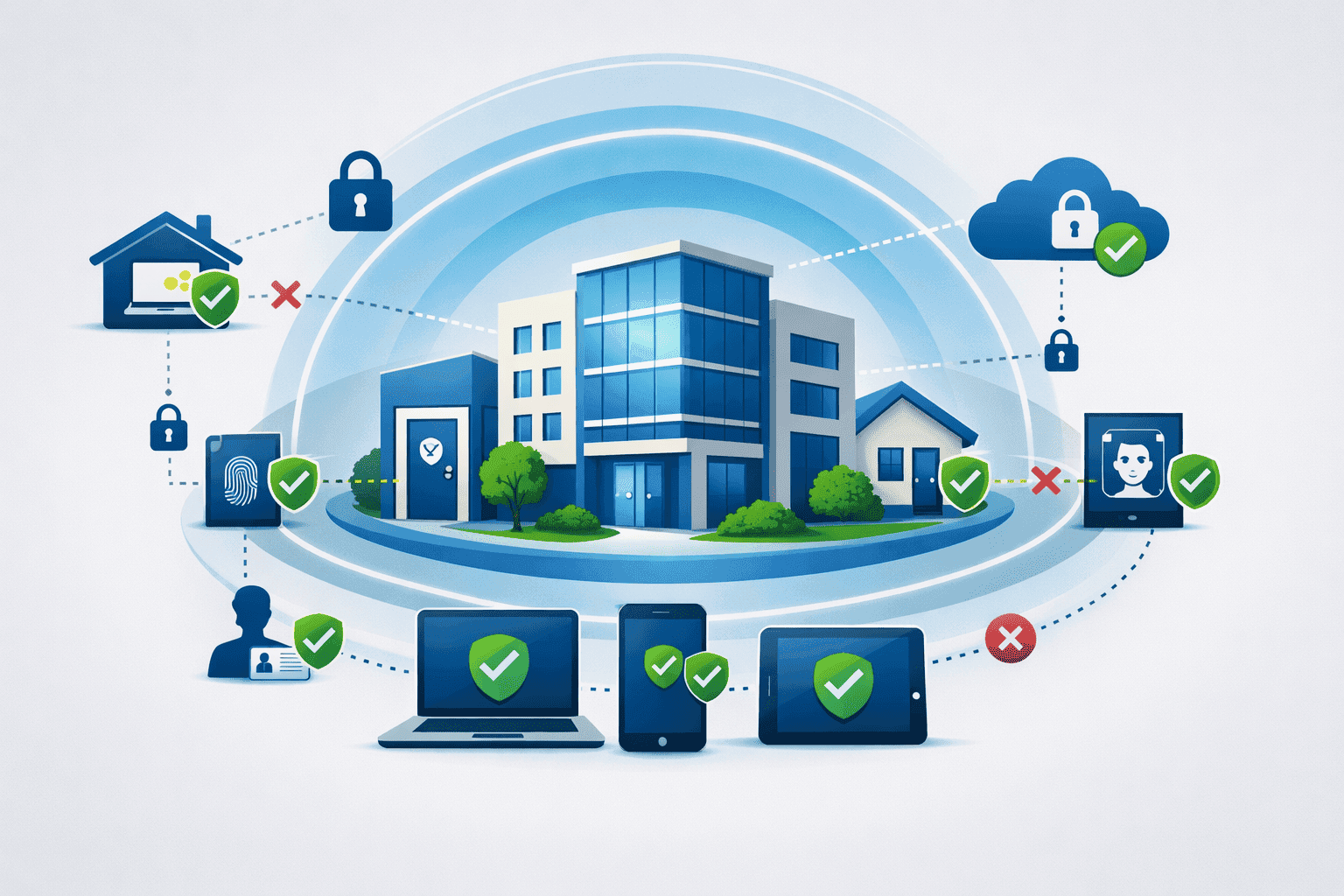
Zero Trust is a security approach where no user or device is automatically trusted—everything must be verified before access is granted.
Because businesses now operate across cloud platforms, remote work environments, and multiple devices, making traditional “perimeter” security ineffective.
Traditional security trusts users once inside a network, while Zero Trust continuously verifies every action and limits access at all times.
- Verify every identity - Grant least-privilege access - Assume breach - Verify devices - Monitor continuously
Not necessarily. It’s a framework that uses existing tools like MFA, identity management, and monitoring systems together.
No. Small and medium businesses benefit significantly, especially as they are frequent targets of cyberattacks.
Enabling multi-factor authentication (MFA) across all systems is the most impactful and immediate first step.
Initially, there may be minor friction, but modern systems like single sign-on and biometrics actually improve user experience over time.